











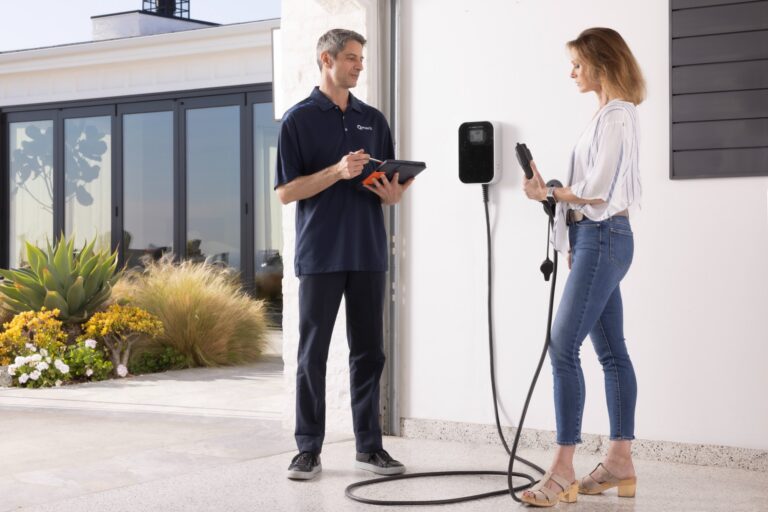
Charging your electric vehicle or plug-in hybrid overnight in a 120-volt home outlet is convenient but slow going. If you’d like to speed things up, it might be time to upgrade to a Level 2 home charger.
Installing an EV charger is not a DIY project. The safest and most responsible option is to hire a licensed electrician trained in EV charger installation, according to Michael Chance, digital marketing manager for Qmerit, which provides electrification services across the U.S. and in Canada.
First Things First
Before starting an EV installation project, Chance advises homeowners to ask potential installers several questions:
- How much will the installation cost?
- How long will the installation take?
- How quickly will the new charger charge your vehicle?
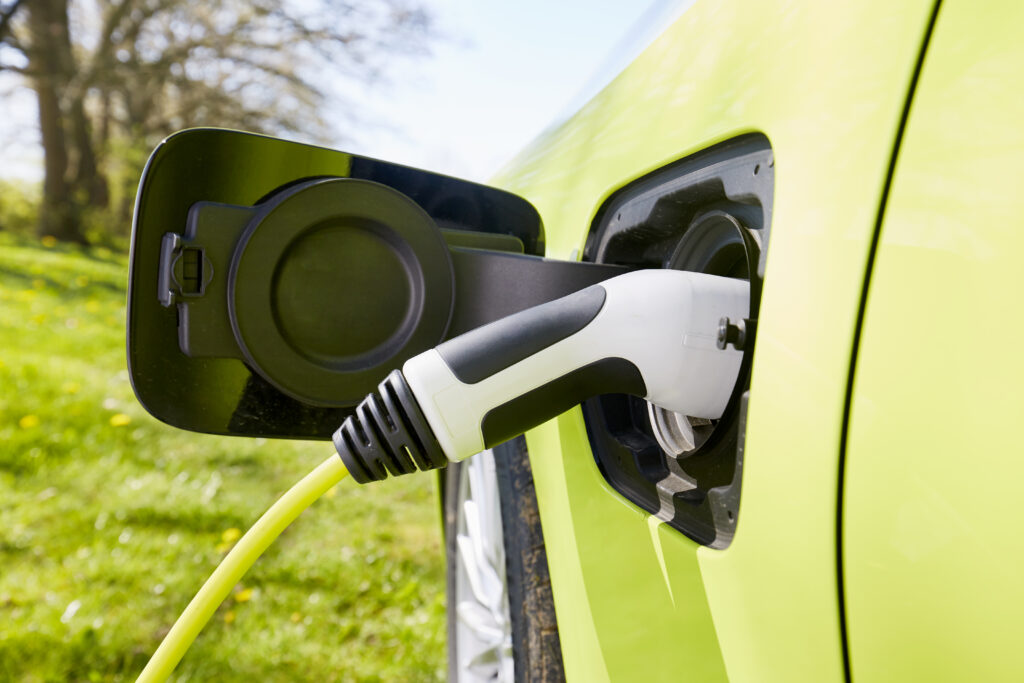
- Is a plug-in or hardwired charger better for you? Hardwired chargers offer the highest reliability and less visible cords. Plug-in chargers offer portability, but you are limited to a 32- or 40-amp charger.
Another factor to consider is that current electrical and fire codes require an added safety feature called a ground fault circuit interrupter (GFCI) for plug-in Level 2 EV chargers and the heavy-duty outlets they use. While this helps protect against electrical shock, it can occasionally trip a breaker during charging.
It’s a lot to sort out, which is why using a professional is helpful.
AAA members get a $75 rebate on home charging solutions for electric vehicles. Learn more.
Reasons to Hire a Licensed Electrician to Install your EV Charger
- A licensed electrician will be more knowledgeable than a general contractor when it comes to all things electrical. They also will be able to assess the home’s power capabilities and whether any changes are needed, such as a panel upgrade, to install an EV charger.
- Only a licensed electrician can apply for and receive an electrical permit to perform work at a house. General contractors cannot engage in major electrical work unless they have an electrical contractor license.
- Electricians trained to install EV chargers are certified through the Electric Vehicle Infrastructure Training Program (EVITP).
- If you do not use a licensed electrician and the person doing the work does not apply for a permit, in the event of a problem, such as if the charger melts or starts a fire, your insurance company may not pay for damage.
- Installing a charger without a permit could impede the sale of a house and potentially lead to fines.
- Professional installers use high-quality components. The type of materials used in an EV charger installation play a critical role in long-term performance and safety. Professional installers select wiring, breakers and protective tubing that meet or exceed NEC requirements for continuous electrical loads, environmental exposure and heat resistance.
- Many EV owners eventually add solar panels to their homes, so establishing a relationship with an electrician is a good idea.
AAA’s Recommendation: Whether you own an electric vehicle or a gas-powered car is up to you – and you should consider lots of factors in making that choice. No matter what type of vehicle you’re choosing, we recommend visiting a dealership, test driving one, and asking as many questions as possible to make an informed decision.