
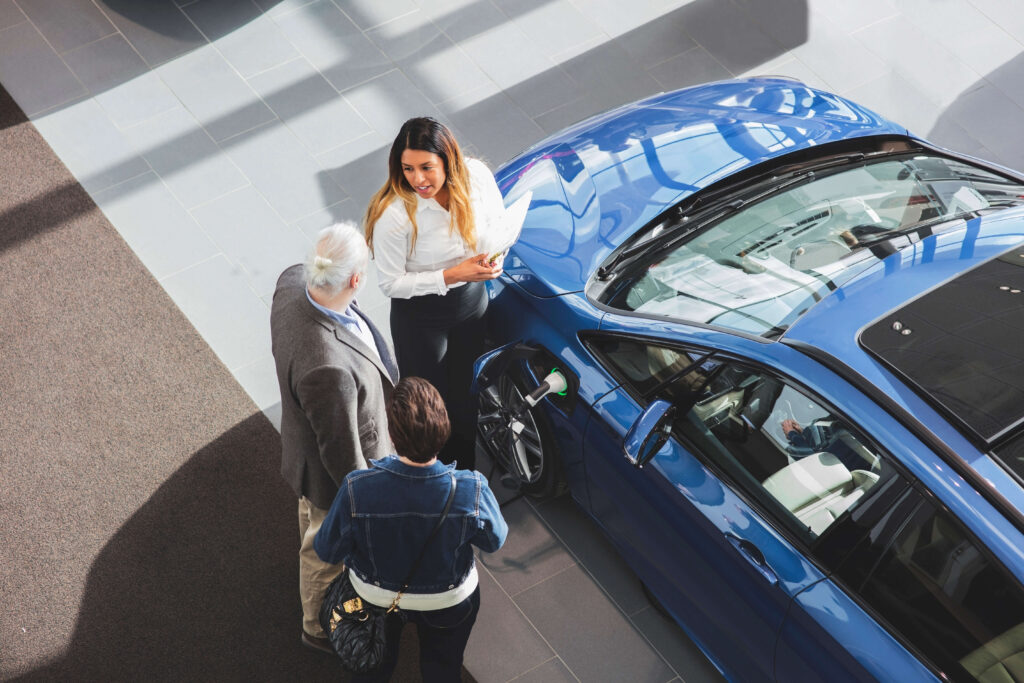










After deciding to purchase an electric vehicle, the next decision facing owners is whether to install a home EV charger.
Before making that commitment, homeowners should do a thorough assessment of their existing electrical capacity, according to Michael Chance, digital marketing manager for Qmerit, which specializes in EV charging and electrical services for homeowners and businesses.
EV Charger Capacity Checklist
Before installing an EV charger, it’s important to make sure your home’s electrical system is ready for the extra demand.
Homeowners usually choose a Level 2 charger because it charges much faster than a standard wall outlet. These chargers run on a 240-volt circuit — the same power used by large appliances, like a clothes dryers or ovens.
To ensure your charger is installed safely and meets local codes, work with a licensed electrician who has experience with EV charger installations.
Find out if your home is ready for an EV charger with this checklist.
- Get an EV charger load calculation done to determine how much electricity your home is using and how much it will need for an EV charger. An EV charger can increase a home’s electrical load by about 7,200 watts or 30 amps, according to Qmerit.
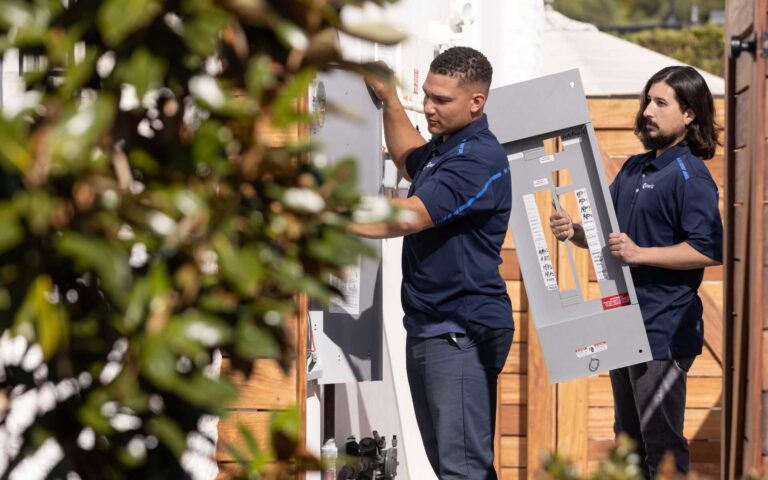
Simply take photos of your electrical panel and charger location and send them to Qmerit. Its proprietary Panel Insights AI tool analyzes panel capacity and total electrical load, helping determine your EV charging installation requirements.
- Check for empty slots or unused breaker spaces in your electrical panel. A Level 2 charger needs a dedicated 240-volt double-pole circuit breaker.
If your panel is 100 amps and is powering appliances such as an HVAC, water heater and dryer, you are at or near capacity and will need to upgrade your electrical panel or install a load-shedding tool such as a load controller, which can shut down breakers if too much power is in use.
- Decide on a location. Before you pick a spot for the charger, make sure the car’s charging cable easily reaches the charger from where the car will be parked. Never use an extension cord with an EV cable.
- Check the strength of the Wi-Fi signal in the garage, if that is where the charger is installed, otherwise the charger won’t be able to send signals to its app. If the signal is not strong enough, potential solutions include installing a Wi-Fi extender or purchasing a charging station with an Ethernet port or cellular connectivity.
- Consider a smart electrical panel. While smart electrical panels do the same job as traditional ones — keeping circuits from overloading — they do it more thoughtfully. Installed hardware and software seamlessly ensure that power goes to the most necessary appliances and allows homeowners to monitor usage and cut power to rooms or appliances that are not in use and even turn off home appliances remotely.
Smart panels also can prevent power surges and give homeowners the ability to schedule heavier power usage such as charging an EV, at times of the day when the electrical rates are lower.
Learn more about how Qmerit can help with EV charger installation and a variety of electrical upgrades for your home or business.
AAA’s Recommendation: Whether you own an electric vehicle or a gas-powered car is up to you – and you should consider lots of factors in making that choice. No matter what type of vehicle you’re choosing, we recommend visiting a dealership, test driving one, and asking as many questions as possible to make an informed decision.